Oct 2022 | Research Library, Papers, Diagnostics, Experiment, Fusion Energy, Fusion Research, Fusion Science, Fusion Technology, Impurities, Plasma Research
October 2022 | D. Kobayashi (Nihon) | Review of Scientific Instruments | Paper
In the collisional merging formation process, two initial FRC-like plasmoids are accelerated toward each other by a magnetic pressure gradient.

Oct 2022 | News
Nuclear fusion might be one of the most valuable tools humans will develop to battle climate change—but will we all be underwater by the time it gets here? There is no question that the next few years are critical. “We know that we can do some impact positively with renewables, no question. But we also know that they can’t do 100 percent,” TAE Technologies CEO Michl Binderbauer told Newsweek. “What ideally happens is we maximize solar and wind as soon as we can in areas where it makes sense … And hopefully, very quickly, you’re ramping fusion.”
Oct 2022 | Research Library, Papers, Diagnostics, Experiment, Fusion Energy, Fusion Research, Fusion Science, Fusion Technology, Plasma Research
October 2022 | T. Seki (Nihon) | Review of Scientific Instruments | Paper
A visible light tomographic imaging system has been developed for the collisional merging experiment of FRCs on the FRC Amplification via Translation–Collisional Merging device at Nihon University
Oct 2022 | Press Releases
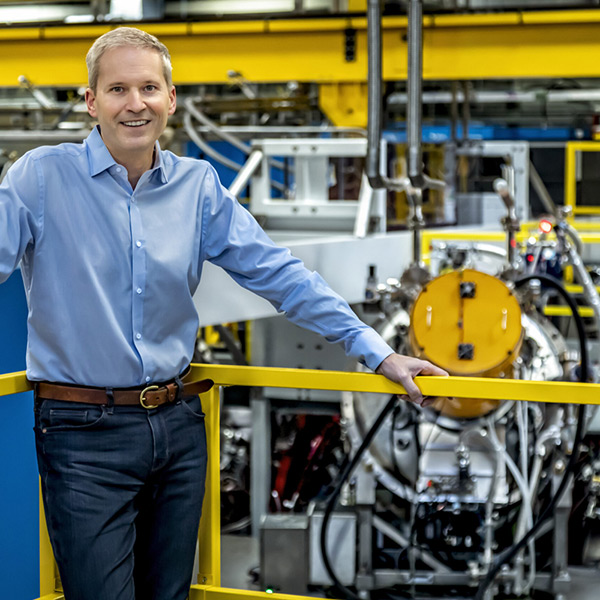
Goldman Sachs selected Binderbauer from multiple industries to be honored at the two-day event.
TAE was founded to commercialize a completely safe, sustainable, non-radioactive source of carbon-free energy, capable of meeting humanity’s growing energy needs without impacting the environment.
Oct 2022 | Research Library, Papers, Diagnostics, Experiment, Fusion Energy, Fusion Research, Fusion Science, Fusion Technology, Plasma Research
October 2022 | A. Bondarenko | Review of Scientific Instruments | Paper
The C-2W experimental device at TAE Technologies utilizes neutral beam injection and edge biasing to sustain long-lived, stable FRC plasma.