
Finally, Fusion Takes Small Steps Toward Reality
The focus of research on fusion power has moved from big government programs to startups with novel designs.

The focus of research on fusion power has moved from big government programs to startups with novel designs.
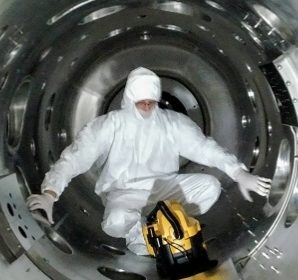
Fusion power may have just had the long-awaited breakthrough its backers have been waiting years for. A small secretive company in California called TAE Technologies has been working on fusion power for years.
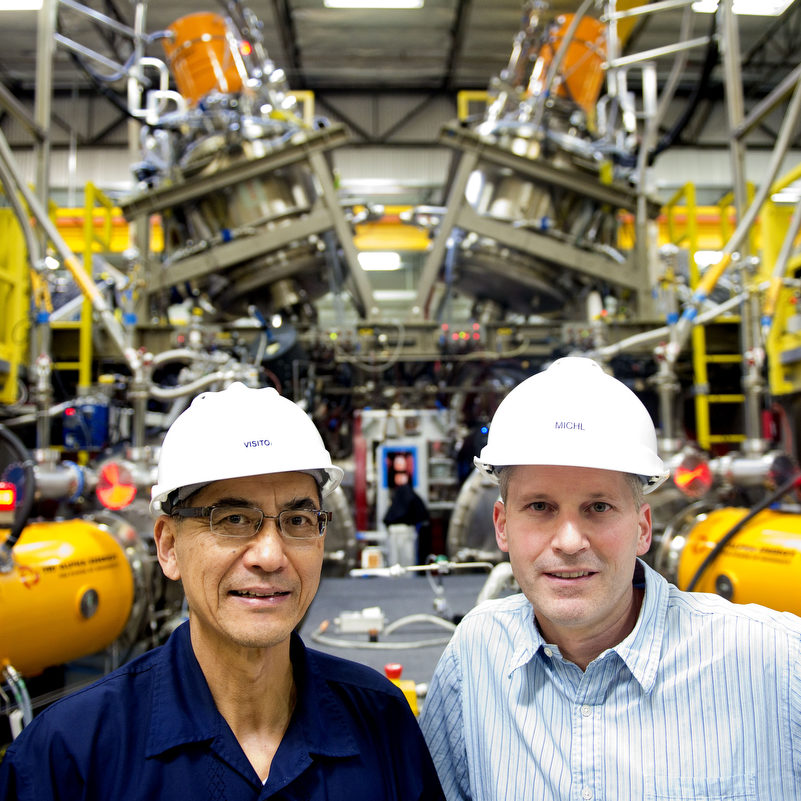
Tucked in an unmarked industrial building in Foothill Ranch, the physicists at secretive nuclear fusion company TAE Technologies believe they have moved a step closer to achieving viable fusion energy – the holy grail of sustainable energy.
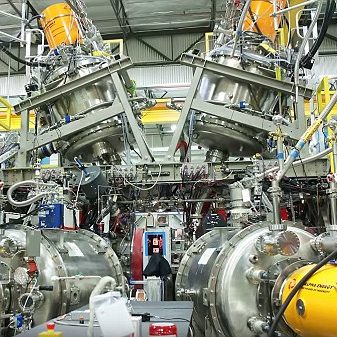
A secretive start-up claims to have made a breakthrough in creating fusion power, a limitless source of energy.
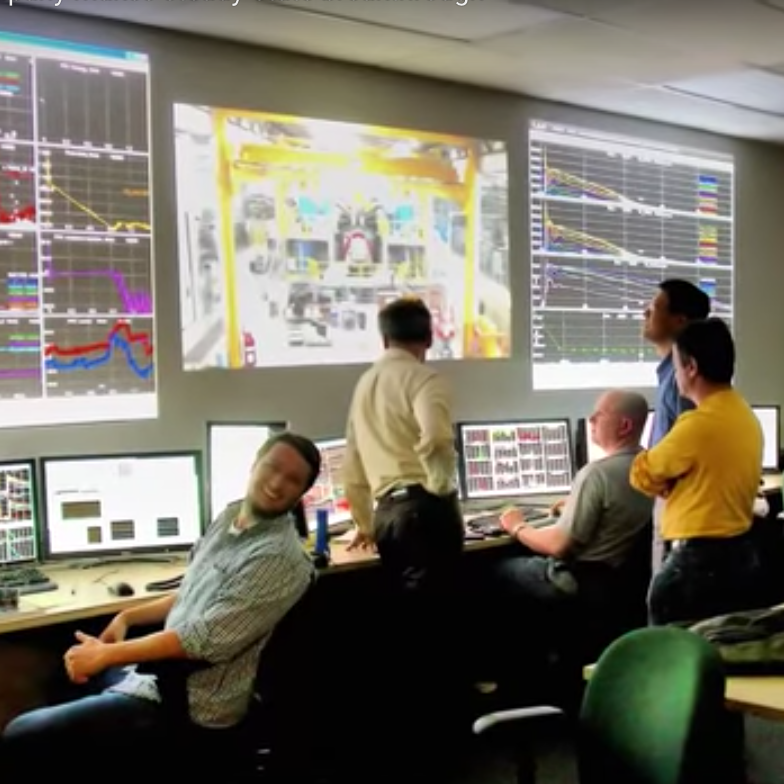
In an unassuming building in an unassuming industrial park south of Los Angeles, nuclear physicists are smashing together rings of plasma at one million kilometers per hour, producing temperatures on the order of a hundred-million degrees Celsius.

In a suburban industrial park south of Los Angeles, researchers have taken a significant step toward mastering nuclear fusion—a process that could provide abundant, cheap, and clean energy.
May 2015 | M. Binderbauer | Physics of Plasmas | Paper
Conventional field-reversed configurations (FRCs), high-beta, prolate compact toroids embedded in poloidal magnetic fields, face notable stability and confinement concerns.
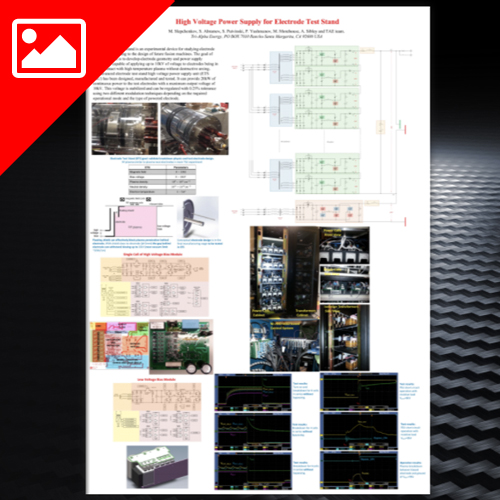
May 2015 | M. Slepchenkov | 2015 SOFE | Poster
The Electrode Test Stand is an experimental device for studying electrode physics contributing to the design of future fusion machines.
April 2015 | H. Guo | Nature Communications | Paper
Developing a stable plasma state with high-beta (ratio of plasma to magnetic pressures) is of critical importance for an economic magnetic fusion reactor.
February 2015 | H. Gota | Fusion Science and Technology | Paper
C-2 is a unique, large compact-toroid (CT) device at TAE Technologies that produces field-reversed configuration (FRC) plasmas by colliding and merging oppositely directed CTs. Significant progress has recently been made on C-2, achieving ,5 ms stable plasmas with a dramatic improvement in confinement, far beyond the prediction from the conventional FRC scaling.